
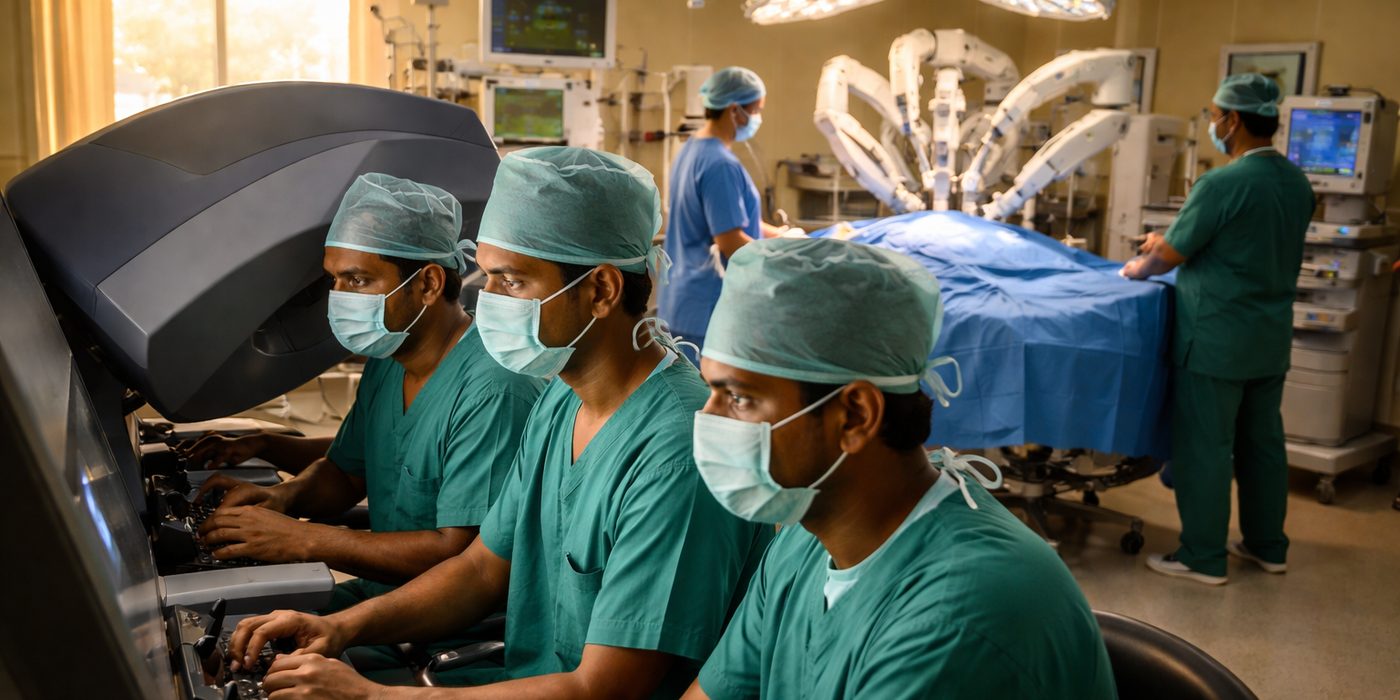
HBCH&RC Visakhapatnam Opens Robotic Surgery Suite, Covers NTR Vaidya Seva Patients
Homi Bhabha Cancer Hospital & Research Centre in Visakhapatnam has performed its first robotic procedure and opened services to patients enrolled in Andhra Pradesh's NTR Vaidya Seva insurance scheme, with NTPC funding part of the build-out through its CSR programme. The detail that matters is the payer, not the platform: state-insured patients get access from day one. For robotics vendors, India's public-sector oncology centres are becoming a distinct and price-sensitive market tier.

Gamma Robotics Launches From China Telecom's TeleAI With Self-Evolving Humanoids
Gamma Robotics, the first market-oriented company incubated by China Telecom's TeleAI institute, has launched in Shanghai to build humanoid robots that improve themselves through operation rather than manual retraining. The company is also developing whole-body models for coordinated motion and manipulation. The spinout gives a state-owned telecom carrier its first direct stake in commercial embodied AI, and it tests whether network operators can compete with dedicated robotics startups on software-defined machines.

South Korea's KRW2.2T Daegu Plan Taps 12 Firms for Humanoid Supply Chain
A KRW2.2 trillion (about US$1.66 billion) private investment plan names 12 companies, many of them automotive and machinery component makers, to build a domestic humanoid robot supply chain in Daegu. The city is trying to convert a legacy auto-parts base into a humanoid manufacturing cluster rather than ceding actuators, reducers, and structural components to Chinese suppliers. The plan's real test is whether mid-tier parts makers can hit humanoid-grade precision at volume pricing.
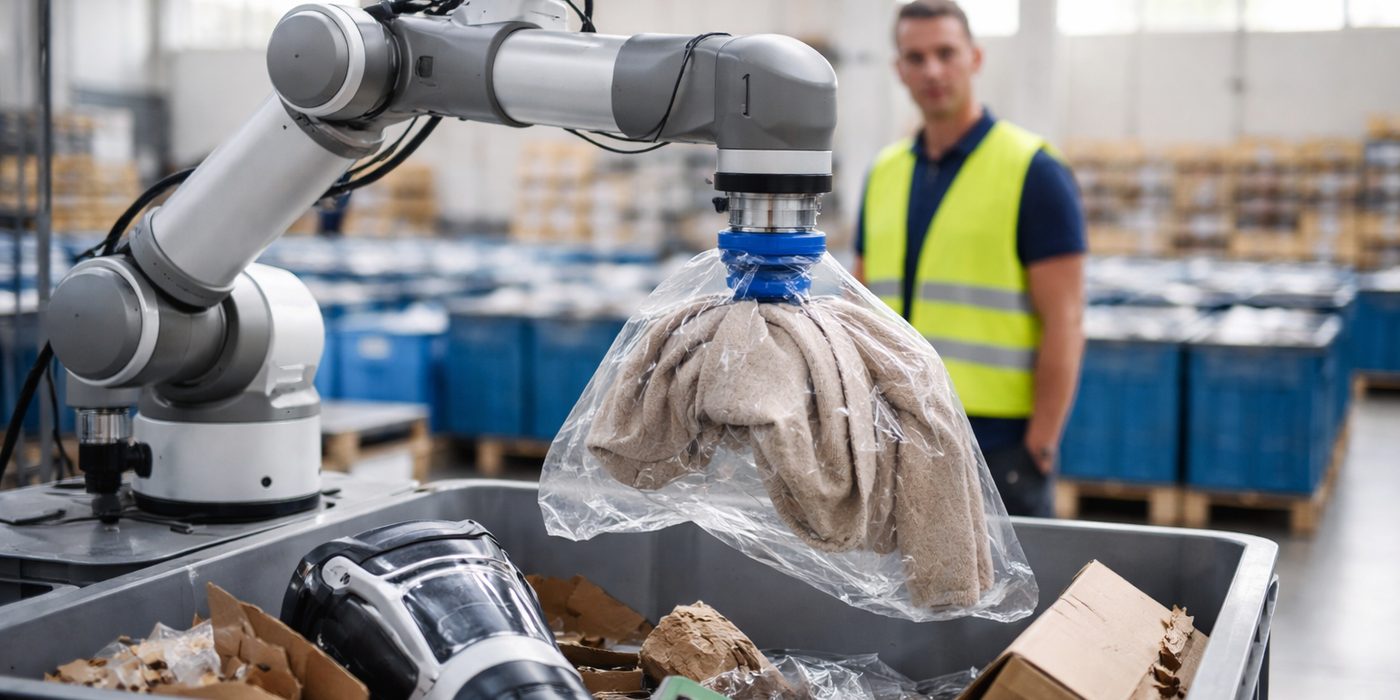
Teradyne Robotics, Sereact Partner to Run Cortex Physical AI on UR Arms
Teradyne Robotics, parent of Universal Robots and Mobile Industrial Robots, and Berlin-based Sereact announced a partnership on October 21, 2026, putting Sereact's Cortex physical AI platform on Universal Robots arms. The target is unstructured work such as returns handling in retail, logistics and manufacturing, where fixed-program automation has struggled. For Teradyne, it is a bet that the installed base of cobots becomes more valuable as the intelligence layer moves to software. For Sereact, it is distribution at scale.
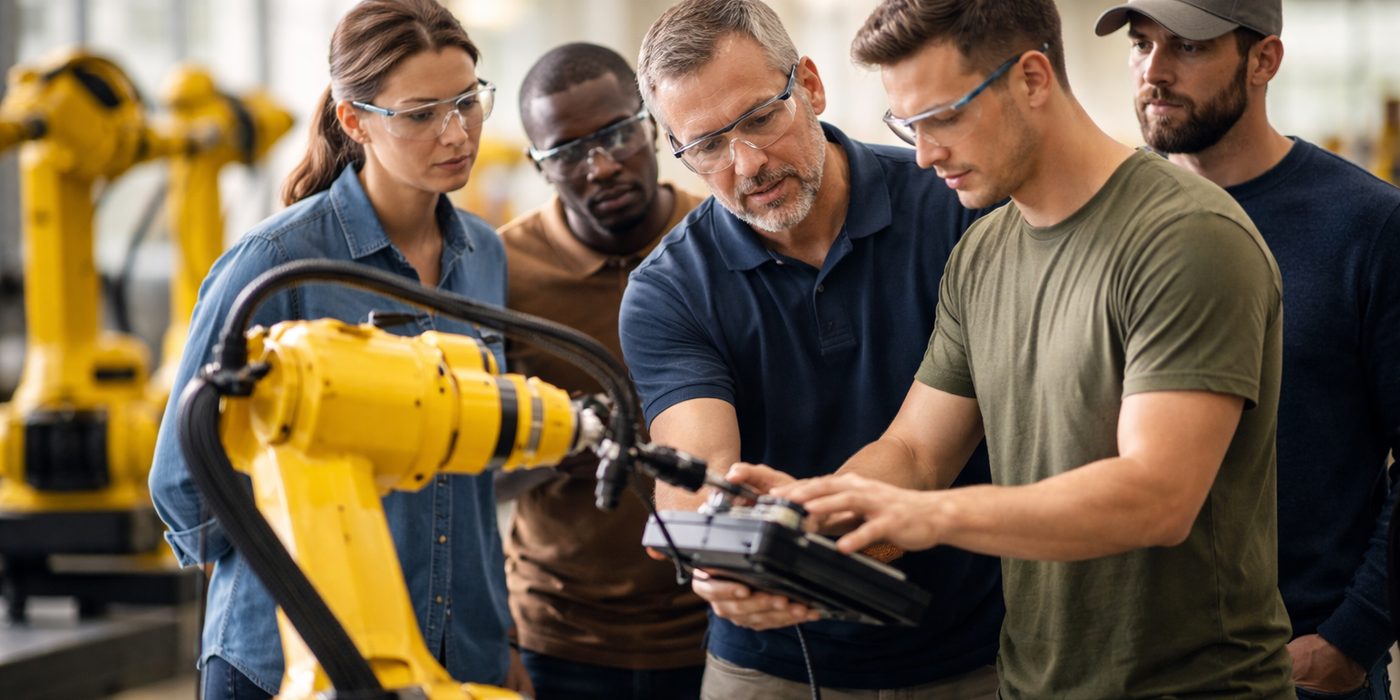
FANUC America Opens Training Academy, Largest U.S. Robotics Center
FANUC America has opened the FANUC Training Academy in Rochester Hills, Michigan, billing it as the largest corporate robotics and industrial automation training facility in the United States. The investment targets a persistent bottleneck for manufacturers: not a shortage of robots, but a shortage of people who can program, maintain, and troubleshoot them. For integrators and plant operators, the facility signals that vendors increasingly see workforce development as a competitive moat, not a service line.

CoreWeave Physical AI Launchables Package Isaac Sim, CARLA, MuJoCo, Cosmos 3
CoreWeave on October 21 released Physical AI Launchables, a catalog of pre-tested workload templates covering NVIDIA Isaac Sim, CARLA, MuJoCo, NVIDIA AlpaSim and NVIDIA Cosmos 3. The pitch is narrow and practical: collapse the weeks of infrastructure wiring that precede any robot-policy experiment into a single configured launch. For robotics and autonomous-vehicle teams, the product shifts the competitive question from who has GPUs to who can iterate fastest on them.

Origin Raises $20M From Accel, Zacua for Construction Robot Fleet
Origin, a deeptech startup building autonomous construction robots, has closed a $20 million round led by Accel and Zacua. The money funds a plan to put 150 robots on job sites across the US and Europe by 2027, sold on a subscription model rather than as capital equipment. Origin is pitching Western contractors savings of up to 20% as labour shortages squeeze margins. The real test is whether a software-style business model can survive the physical, unpredictable reality of active building sites.
The global robotics industry by the numbers — 2026
Our annual data report covers investment flows, geographic adoption, and the companies to watch in 2026.
View Funding Coverage →
Intuitive Surgical Stock Falls on Narrowed 2026 da Vinci Procedure Guidance
Intuitive Surgical beat Wall Street's third-quarter estimates, yet shares fell sharply Tuesday because management only narrowed its full-year 2026 procedure-growth outlook rather than raising it. Investors had priced in a bigger upgrade to da Vinci volume forecasts. The reaction shows how little room the robotic surgery leader has for anything short of acceleration. For a company valued on procedure growth, a tighter range reads as a ceiling, not a floor.
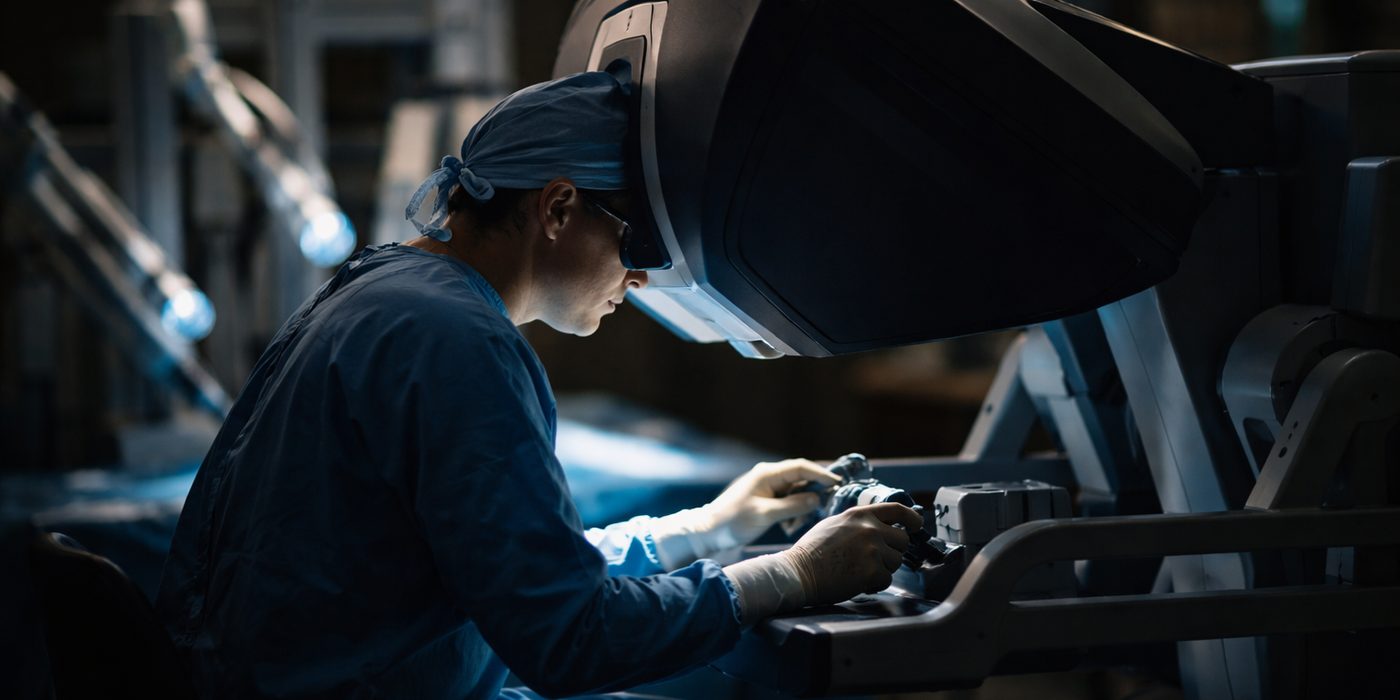
maxon Coreless BLDC Motors Enable Force Feedback in Surgical Robots
maxon UK & Ireland's medical chief Matthew Dean argues that force feedback, not raw actuator power, is now the deciding factor in surgical robot control. The case rests on coreless brushless DC motors, whose low inertia and clean current-to-torque behavior let designers sense tissue contact through the motor itself. For OEMs, that points toward fewer dedicated force sensors, smaller instrument tips and tighter sterilization constraints. Surgeons stand to regain the sense of touch that minimally invasive procedures took away.

Pentagon Seeks $50B in Reconciliation Funds for Mass Drone Production
Defense Secretary Pete Hegseth is asking Congress for $50 billion in reconciliation funding to scale autonomous and robotic systems, a sum that would dwarf prior drone line items and reshape procurement for the entire unmanned sector. The request pushes the Pentagon toward volume manufacturing over bespoke acquisition. For suppliers, the money signals demand for components, autonomy software, and factory automation. The open question is whether production capacity exists to absorb it.
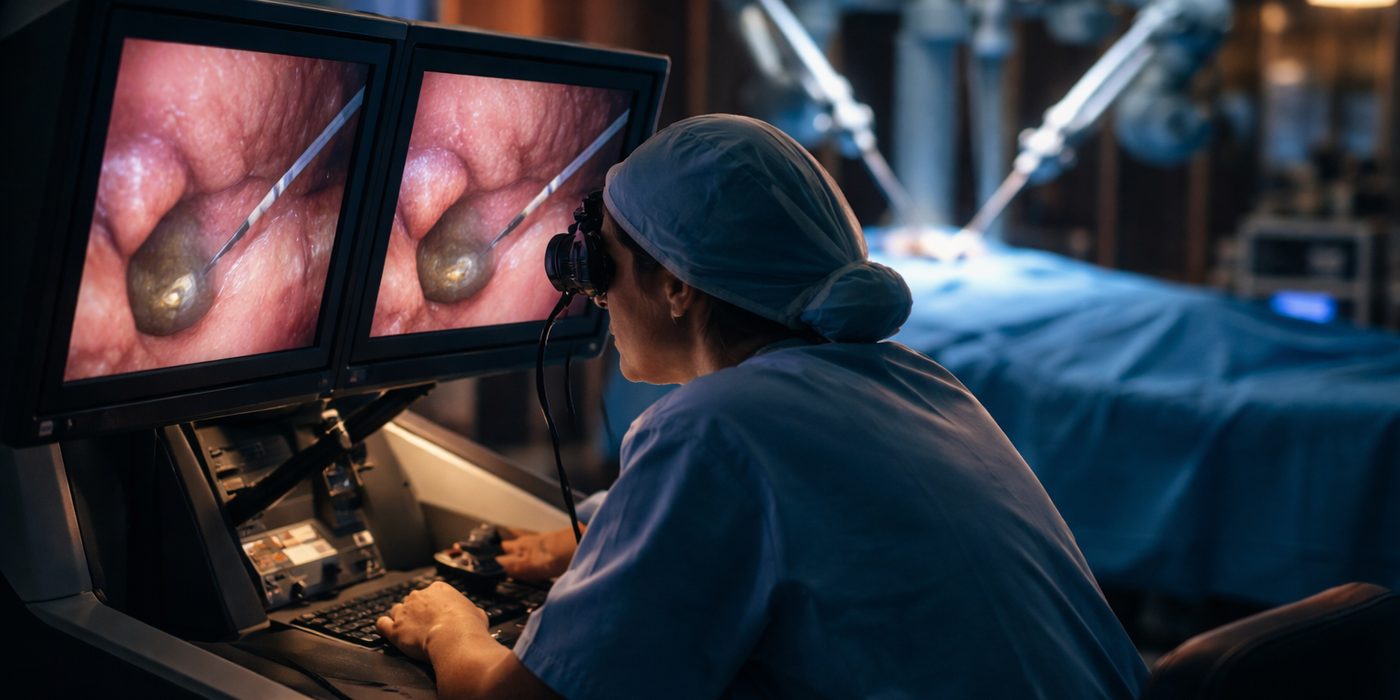
NVIDIA Cosmos3-H-Dreams Simulates Gallbladder Surgery in Real Time
NVIDIA has released Cosmos3-H-Dreams, a real-time, action-conditioned generative world model fine-tuned on clinical cholecystectomy recordings from CMR Surgical's Versius system. The checkpoint and companion code went public on October 20, 2026. NVIDIA says it is the first real-time generative surgical simulator trained on clinical gallbladder-removal footage. For surgical robotics developers, the open release could lower the cost of testing autonomy software without operating rooms, though clinical validity remains unproven.
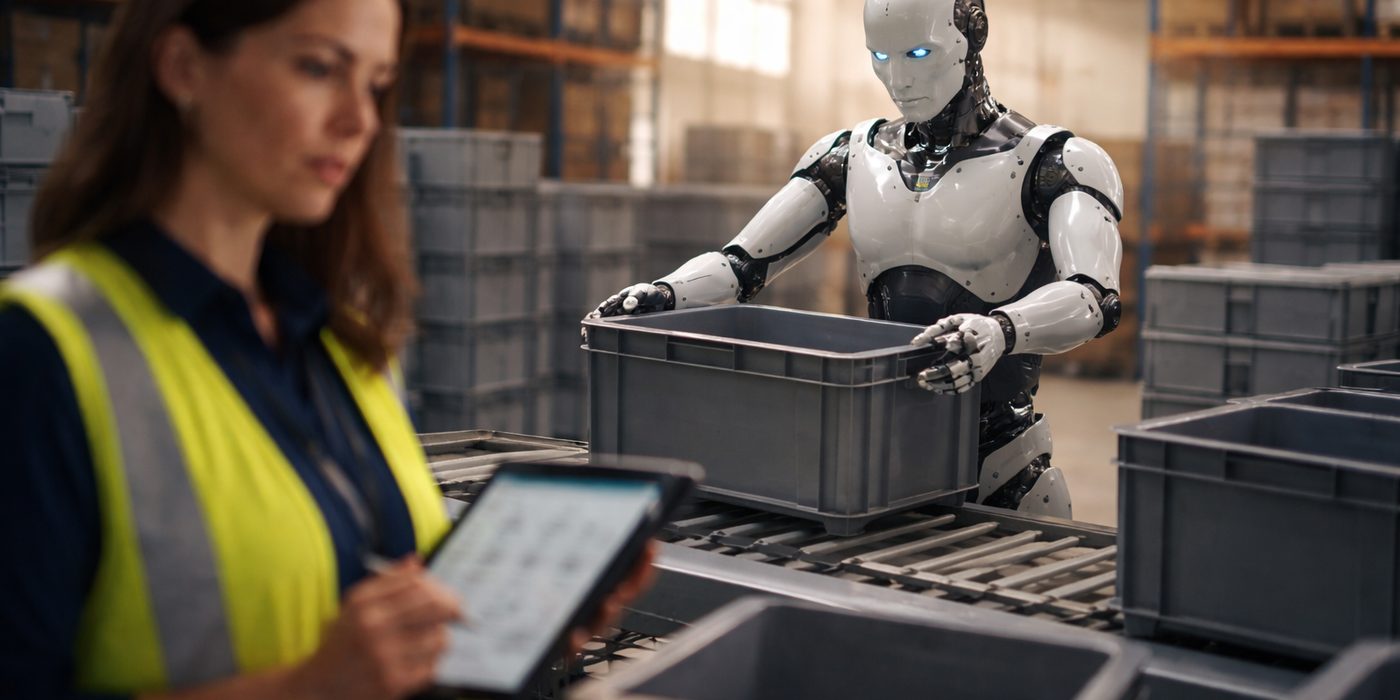
Humanoid Warehouse Robots Hit the ROI Test as Pilots Become Contracts
After a decade of demo videos, humanoid robots are being priced, scheduled, and measured against warehouse labor costs, and the economics now matter more than the choreography. Operators are asking whether a bipedal machine can beat a $20-an-hour worker, a conveyor, or a purpose-built mobile robot. The answer so far is narrow: yes in specific tote-handling tasks, no almost everywhere else. Buyers who treat humanoids as a general-purpose workforce are likely to be disappointed.
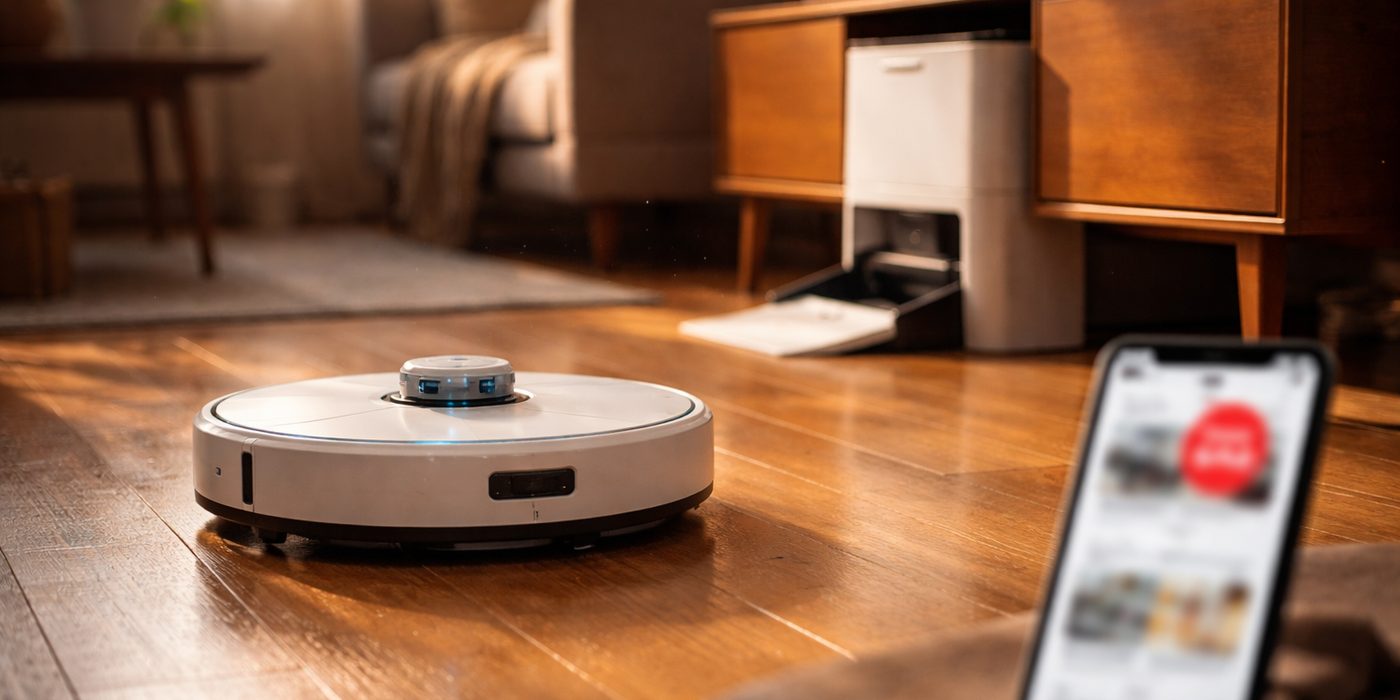
Roborock Q7 M5+ Drops 31% on Amazon, Pushing LiDAR Self-Emptying Below $230
Amazon is selling the Roborock Q7 M5+ robot vacuum and mop at 31% off, a cut of more than $100 on a self-emptying model that carries LiDAR navigation. The discount puts laser-based mapping and an automatic dust bin in the price band once reserved for bump-and-crash budget units. For manufacturers and investors, the deal shows how quickly premium autonomy features are migrating down-market, and how that migration is compressing margins across the consumer floor-care category.

Anduril Ghost Shark, Speartooth and Bluebottle Get Modular Payloads From Australia
Australia's Department of Defence has announced modular payloads that will be integrated onto Anduril's Ghost Shark and C2 Robotics' Speartooth unmanned underwater vehicles, as well as Ocius's Bluebottle unmanned surface vessel. The announcement moves three uncrewed platforms from sensing and surveillance toward carrying mission equipment. For the robotics industry, it signals that payload standardization, not hull design, is becoming the contested ground in maritime autonomy, and it gives Australian suppliers a defined role in a fast-growing market.

Roborock RockMow X130H Hits $1,999.98 With RTK and Quad-Vision Navigation
Roborock's RockMow X130H, a wire-free four-wheel-drive robotic mower that pairs full-band RTK satellite positioning with four vision cameras, is now listed at $1,999.98 on Amazon. The machine claims coverage of up to one acre and an 80 percent slope capability, specifications that put it in direct contention with established boundary-wire incumbents. For robotics investors and engineers, the price point reveals how quickly sensor-fusion autonomy is migrating from vacuum cleaners to outdoor platforms, and how thin the margin for navigation error becomes at lawn scale.

Hyundai Forms RX Strategy Team to Speed Atlas Humanoid Production
Hyundai Motor Group has created an RX Business Strategy Team under a "Robotics Everything" banner, consolidating oversight of its global robotics push as it moves Atlas from Boston Dynamics research platform toward mass production and commercial sale. The restructuring puts a single group-level unit in charge of what had been scattered across Boston Dynamics, Hyundai Motor, Kia and Hyundai Mobis. For humanoid suppliers and investors, it is the clearest sign yet that a major automaker intends to be both Atlas's largest buyer and its largest manufacturer.
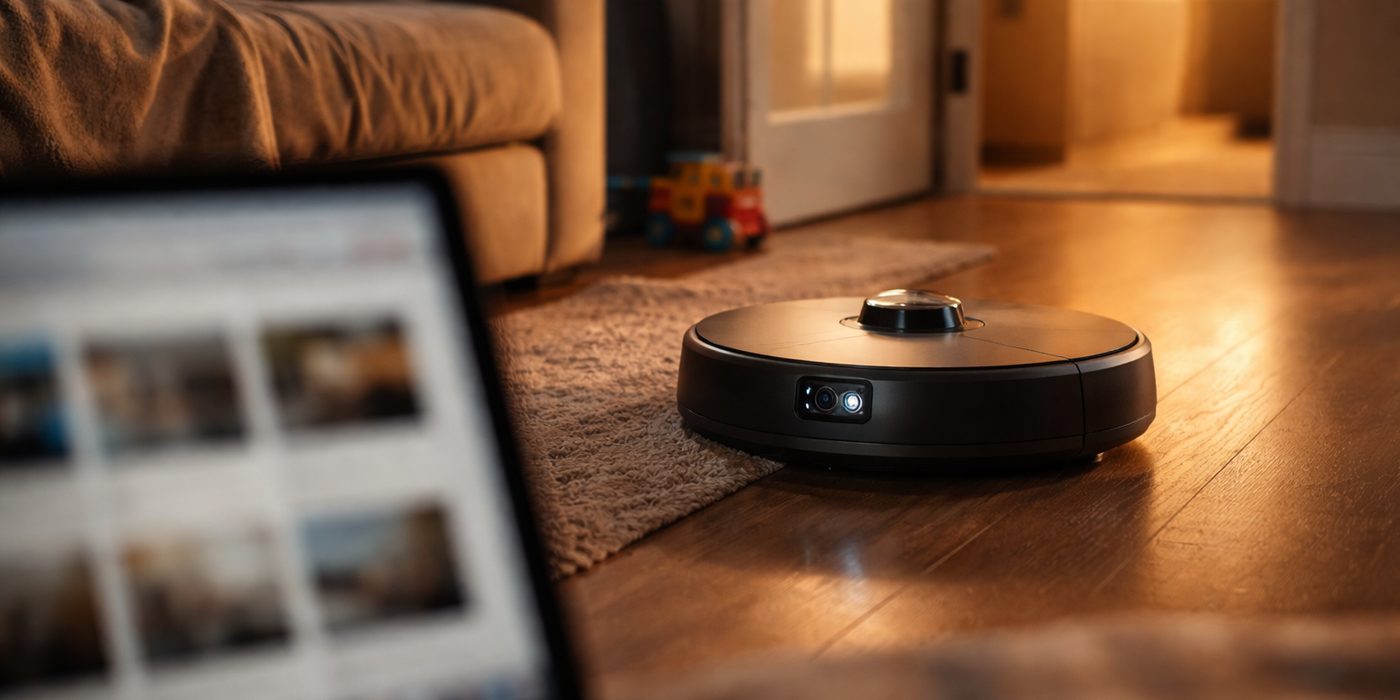
Robot Vacuum Cameras and Microphones Expose Home Data to Cloud Risks
Consumer robot vacuums now ship with cameras, microphones, and LiDAR that map interiors in fine detail, and much of that data leaves the home. A reported 2022 incident, in which private images captured by test-unit vacuums surfaced in online forums, showed how sensor data can travel through contractors. For manufacturers, privacy architecture is becoming a competitive and regulatory variable. For engineers, the open question is how much perception can stay on the device.
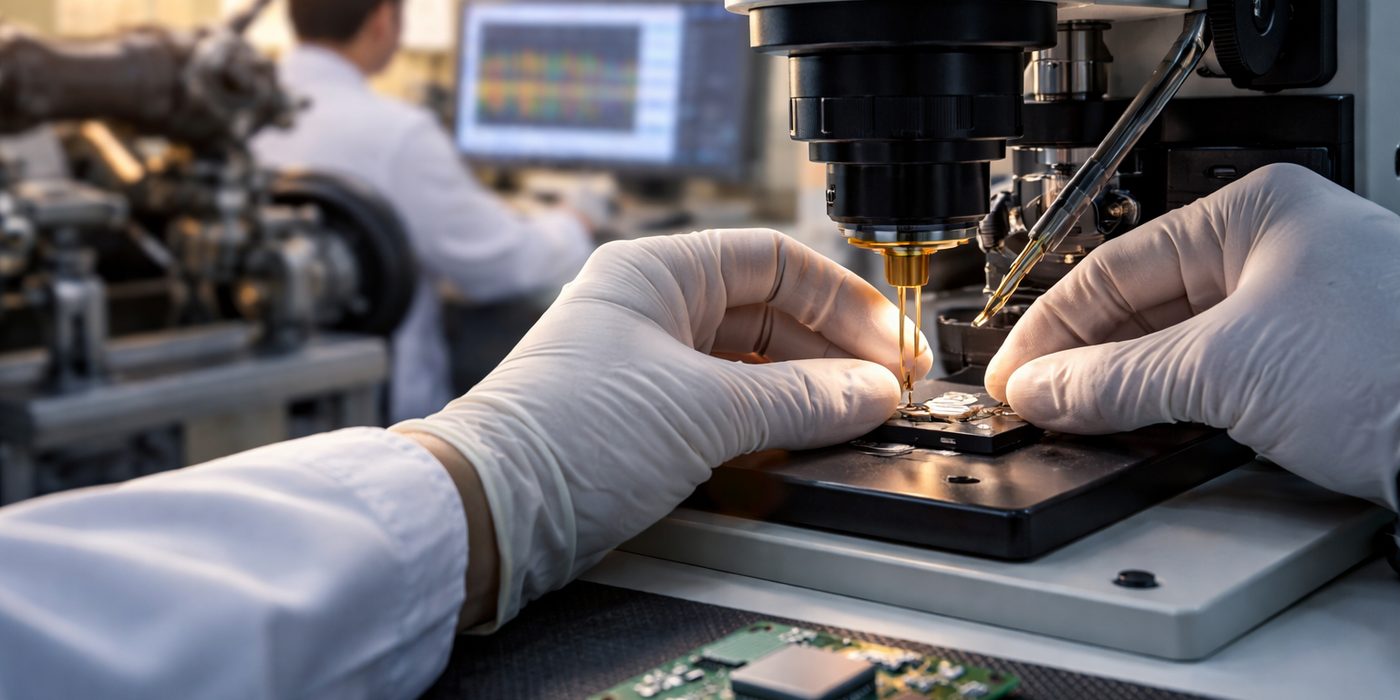
Alibaba XuanTie E908A RISC-V Chip IP Targets ASIL-D Automotive Safety
Alibaba's DAMO Academy used the RISC-V China Summit in Shenzhen on October 19 to introduce the XuanTie E908A, a processor IP core built for safety-critical vehicle computing and certified-class to ASIL-B and ASIL-D requirements. Alongside it came a roadmap spanning autonomous driving and robotics. The move pushes open-architecture silicon into the most regulated corner of embedded computing, and gives Chinese automakers and robot builders a domestic alternative to Arm-based safety cores.
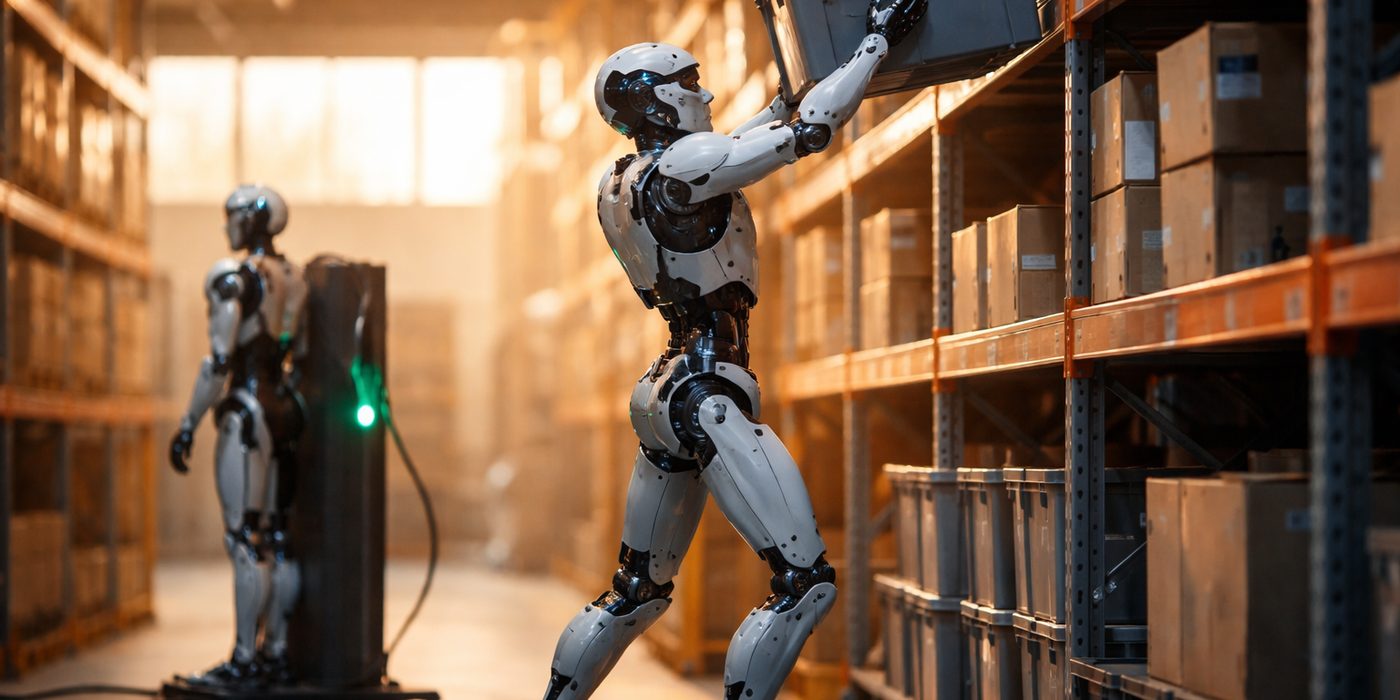
Agility Robotics Digit 5 Lifts 23 kg Bins, Charges 9 Minutes for 90 Minutes of Work
Agility Robotics has launched Digit 5, a fifth-generation bipedal humanoid built to lift 23-kilogram bins onto high shelves and run 90 minutes on a nine-minute charge. Cofounder Jonathan Hurst frames it as the first humanoid designed to work safely and economically at scale, targeting tens of thousands of units. For warehouse operators and investors, the real test is no longer whether a humanoid can move a tote. It is whether the robot can stay on shift, near people, without a fence.